Italian cuisine UNESCO recognition. Italian food is more than something you eat.
It's something you inherit.
In 2023, Italian cuisine received one of the highest cultural honors in the world: official recognition by UNESCO as an Intangible Cultural Heritage of Humanity. This recognition didn't celebrate a single dish or recipe — it honored an entire way of life.
A way of cooking shaped by tradition, culture, craftsmanship, and love, passed down from generation to generation.
For Italians, this Italian cuisine UNESCO recognition felt deeply personal. Because Italian cuisine has never been about trends. It has always been about continuity.
What Did UNESCO Recognize About Italian Cuisine?
In 2023, UNESCO added Italian cuisine to its list of Intangible Cultural Heritage of Humanity — the first time a national food culture was recognized in this way. The recognition wasn't awarded to a single dish or ingredient. It honored the entire system of knowledge, ritual, and practice that defines how Italians grow, prepare, share, and pass down food.
Specifically, UNESCO cited the Mediterranean diet and its role in shaping Italian food culture, the importance of regional traditions — from Tuscan cantucci to Neapolitan pastry — and the family meal ritual as a living, practiced form of cultural transmission. The criteria for recognition require that the tradition be actively practiced and passed down through generations, not merely preserved in museums or books.
For artisan food producers, this recognition carries real weight. It validates the idea that handcrafted, recipe-driven food made with care and continuity is culturally significant — not just commercially viable. The recognition draws a clear line between industrial food production and the kind of intentional, generational craft that defines authentic Italian baking.
What UNESCO Recognition Really Means

UNESCO's Intangible Cultural Heritage list protects traditions that define who we are — things that can't be replicated or industrialized without losing their soul.
Italian cuisine earned this recognition because it represents:
- Knowledge passed down through generations
- Respect for ingredients and seasonality
- Regional identity and craftsmanship
- Family, ritual, and shared moments
- Hands-on techniques preserved over time
Italian food isn't written in cookbooks first. It's learned at the table, in the kitchen, by watching, repeating, and honoring what came before.
A Legacy That Lives in Our Biscotti
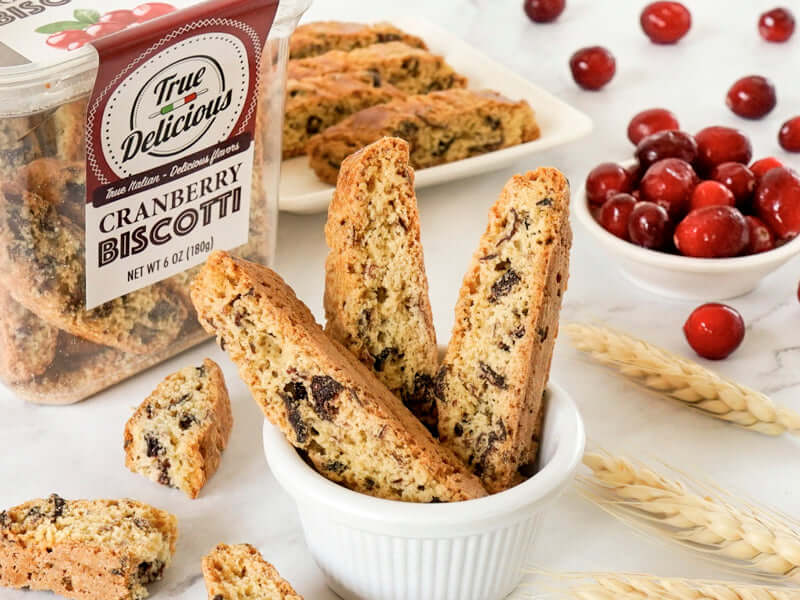
At True Delicious, the Italian cuisine UNESCO recognition resonates deeply — because it mirrors exactly how our biscotti came to be. Our recipes come from Antonio's father, a master Italian pastry chef in Italy, who has been baking professionally for over 50 years. The biscotti we make today are not "inspired by" Italian tradition — they come from it.
They were:
- Learned in Italian bakeries
- Shared among bakers as a sign of respect
- Preserved without shortcuts
Just like Italian cuisine itself, these recipes were perfected through time, repetition, and care — not optimization or mass production.

Why Ingredients Matter (and Always Have)
UNESCO didn't recognize Italian cuisine because it's complicated. It recognized it because it's intentional. In Italian kitchens, every ingredient has a reason: from the flour chosen for structure, to the sugar used with balance, never excess — and techniques designed to enhance, not mask ingredients.
Why It Matters for Authentic Italian Bakers Like True Delicious
The UNESCO recognition of Italian cuisine is meaningful to us at True Delicious because it names exactly what we've been doing since the beginning — carrying forward a living tradition, not recreating a memory of one.
Our biscotti recipes come directly from Palmiro, Antonio's father and an award-winning pastry chef and President of the Union of Neapolitan Pastry Chefs in Italy. That lineage is precisely what UNESCO's recognition is designed to protect: knowledge transmitted through practice, not just documentation. When Palmiro taught these recipes, he wasn't sharing instructions — he was passing down a way of understanding ingredients, balance, and craft that took decades to develop.
For small artisan producers like True Delicious, the recognition also matters commercially. It signals to consumers that authenticity has value — that there is a meaningful difference between a biscotti made from a generations-old Italian recipe in small batches in Petaluma, California, and one manufactured at industrial scale. Every True Delicious biscotti is an expression of that difference.
That philosophy guides everything we bake.
Italian cuisine became the first of its kind to receive this recognition because it proves something powerful: Food is culture. Food is memory. Food is identity.
Every biscotto we bake carries that belief forward — from Italian kitchens, to California, to your home. When you enjoy our biscotti with coffee, tea, or wine, you're not just tasting a cookie.
You're sharing in a tradition that UNESCO now recognizes as belonging to the world — but that will always belong first to families.
As we like to say at True Delicious: Grazie to the family and to the generations who taught us that the best food is made with patience, respect, and heart.